

Antique movements and trends
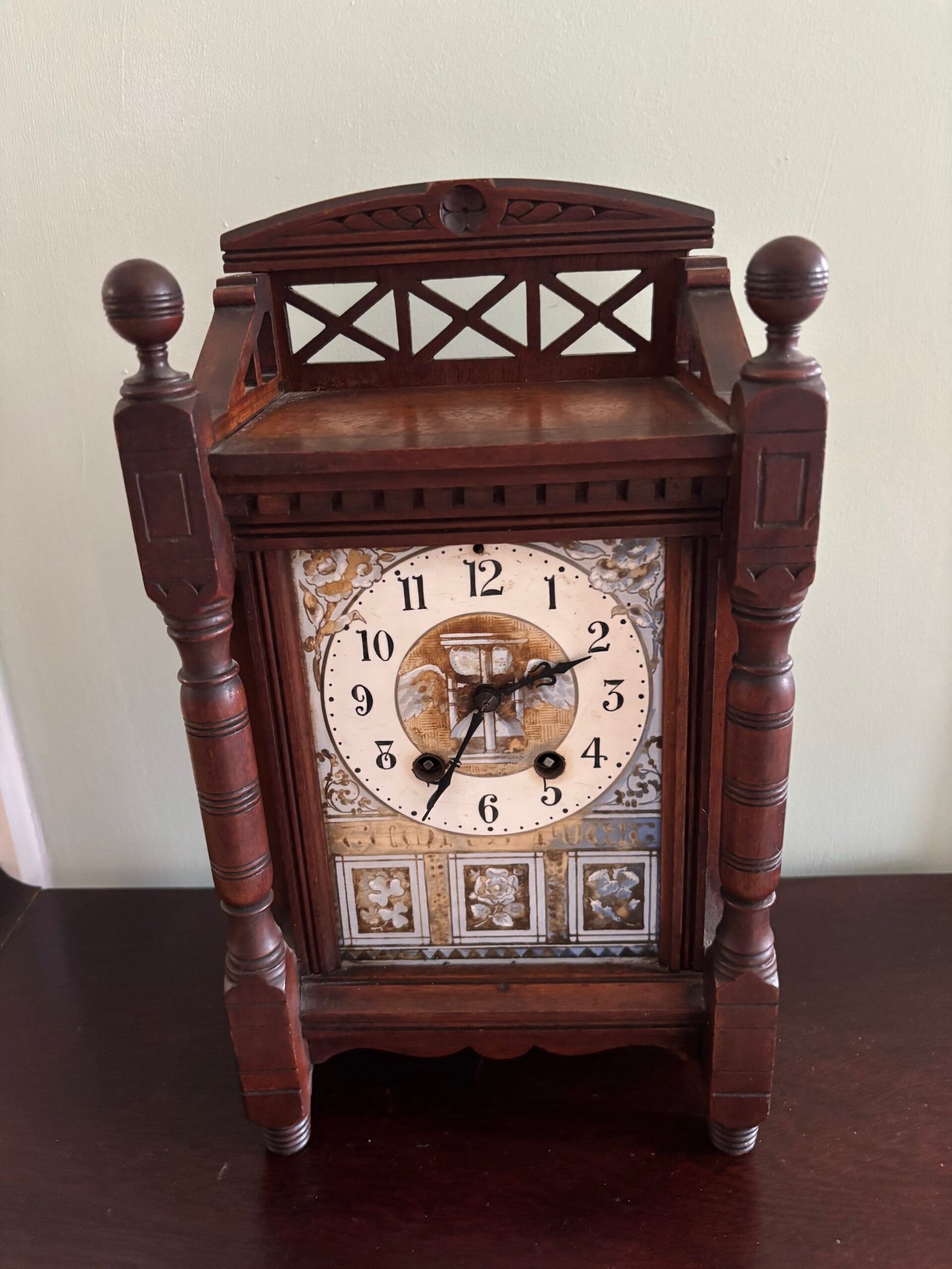
Aesthetic Movement (c. 1870–1900)
- Philosophy: The movement embraced the idea of “art for art’s sake,” meaning art should be created for its beauty alone, without any moral, political, or practical purpose.
- Influences: It drew heavily on Japanese art and design, which was newly popular in Europe after Japan opened to trade. This influence is seen in the use of asymmetry, nature motifs, and delicate, refined details.
- Materials and Techniques:
- Ebonised wood: Wood stained or treated to a deep black finish, often used in furniture to create a sleek, dramatic effect.
- Gilt carvings: Intricate carvings highlighted with gold leaf or gold paint to add luxury and richness.
- Design Characteristics:
- Emphasis on delicate, refined craftsmanship and artistic detail.
- Use of floral and natural motifs, such as peacocks, orchids, and sunflowers.
- Incorporation of exotic elements from East Asia, especially Japan.
- Furniture and decorative objects often avoided excessive ornamentation in favor of elegant simplicity and harmony of materials.
- Key Figures: Designers like Christopher Dresser and artists such as James McNeill Whistler were associated with the movement.
- Legacy: The Aesthetic Movement influenced later styles such as Art Nouveau and remains celebrated for its focus on beauty and artistic integrity.
The Arts & Crafts movement (1850–1915) emerged as a reaction against mass-produced industrial goods. It celebrated handcrafted quality, honesty in materials, and traditional craftsmanship. The movement aimed to bring beauty and integrity back to everyday objects by focusing on natural materials, simple designs, and functionality. It had a strong influence on architecture, furniture, textiles, and decorative arts, encouraging a return to artisanal techniques in response to industrialization.
The Art Nouveau period was an international style of art, architecture, and design that emerged in the late 19th century and lasted roughly from 1890 to 1910. It is characterised by its organic, flowing lines, often inspired by natural forms such as plants and flowers, and an emphasis on decorative arts.
Key features include the following:
- Curvilinear shapes and asymmetry
- Use of stylized natural motifs (like vines, flowers, and insects)
- Integration of fine arts and crafts
- Influence on architecture, graphic design, furniture, jewelry, and glassware
Art Nouveau was a reaction against the academic art styles and industrial mass production of the time, seeking to bring art into everyday life with elegant, handcrafted designs.
Notable artists and designers include Alphonse Mucha, Gustav Klimt, Hector Guimard, and Louis Comfort Tiffany.
The Art Deco period was a prominent design and artistic movement that emerged in the 1920s and 1930s. It is characterized by:
- Bold geometric shapes and symmetrical patterns
- Rich colors and lavish ornamentation
- Use of modern materials like chrome, glass, and stainless steel
- Influence from technology, luxury, and progress
Art Deco was applied across architecture, interior design, fashion, jewellery, and visual arts, symbolising elegance, glamour, and modernity during the interwar years.
The mid-century period, often referred to as mid-century modern, typically spans from the mid-1940s to the mid-1960s. This era is renowned for its distinctive design style that emphasises simplicity, functionality, and organic forms. Influential in architecture, furniture, and graphic design, the mid-century period blended clean lines with innovative materials like plywood, metal, and glass. It reflected the optimism and forward-thinking attitude of the post-World War II era, focusing on open spaces, large windows, and a connection to nature. The style remains highly popular today for its timeless appeal and practical elegance.
1970s Furniture Trends:
- Materials: Extensive use of wood, especially teak and walnut, and laminate surfaces.
- Colours: Earth tones dominated, including avocado green, mustard yellow, and burnt orange.
- Styles:
- Low-profile seating like bean bags and modular sofas.
- Shag carpeting and textured fabrics.
- Funky, curvy shapes influenced by the psychedelic and space-age aesthetics.
- Accessories: Macramé wall hangings and rattan or wicker furniture were popular.
1980s Furniture Trends:
- Materials: Glossy finishes, glass, chrome, and mirrored surfaces became trendy.
- Colours: Pastel tones, black lacquer, and bold primary colors.
- Styles:
- Postmodern designs combining classical elements with bright, unconventional colours.
- Large, overstuffed sofas and chairs.
- Minimalist and geometric shapes in office furniture.
- Accessories: Memphis Group designs with abstract patterns and bright colours were influential.
Both decades reflect their cultural attitudes through furniture: the 70s’ natural, laid-back vibe versus the 80s’ bold, flashy, and sometimes futuristic approach.
