

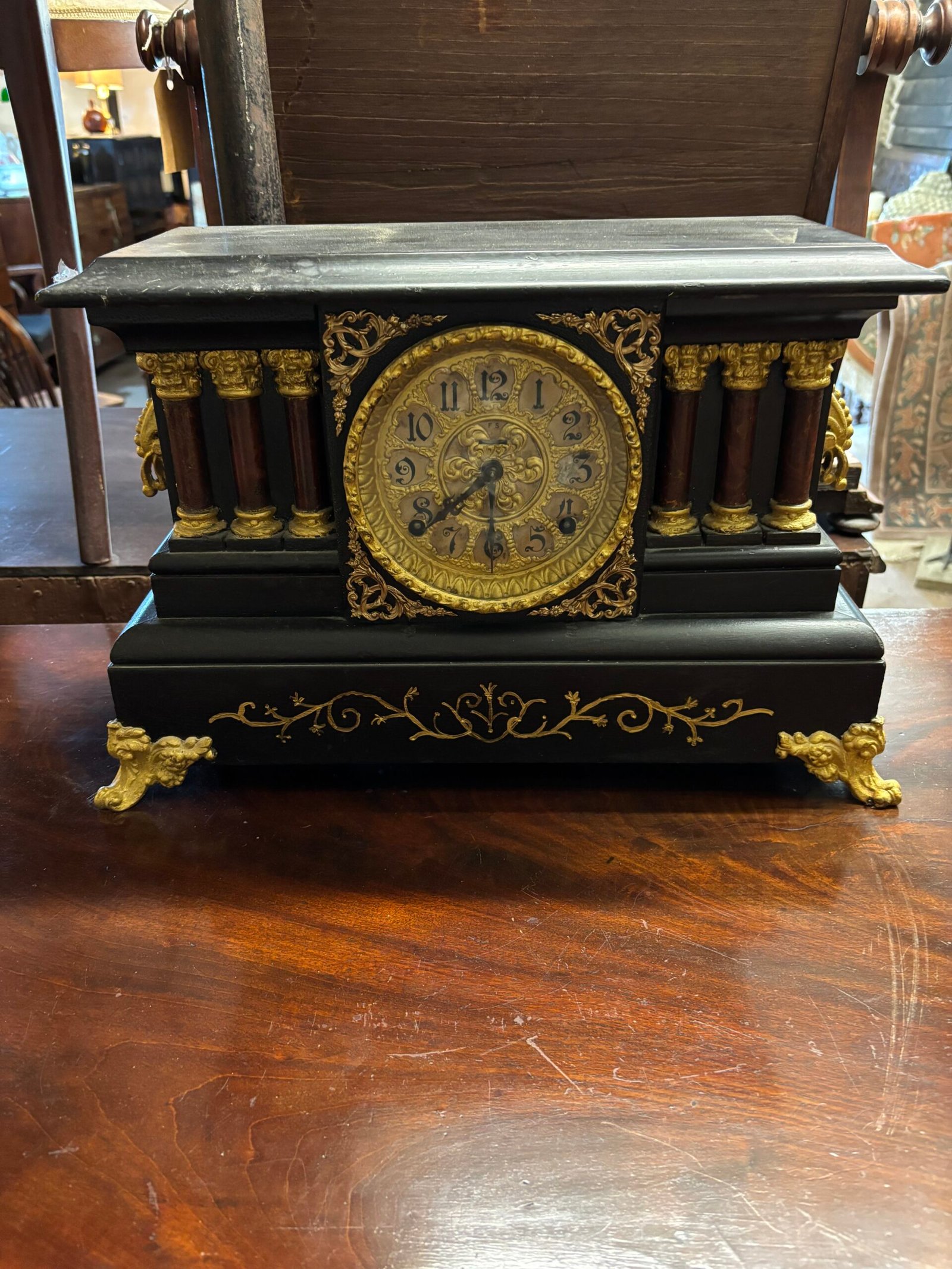
Brief history of antique clocks
History of Antique Clocks
- Civilisations, Timekeeping: The earliest clocks date back to ancient civilisations, using sundials and water clocks to measure time.
- Mediaval Mechanical Clocks (13th-14th Century): The first mechanical clocks appeared in European monasteries around the 1300s, driven by weights and gears, primarily for regulating prayer times.
- Pendulum Clocks (1656): Invented by Christiaan Huygens, the pendulum greatly improved accuracy. These clocks became central in homes and public spaces.
- Symbolising Longcase/Grandfather Clocks (Late 1600s): Tall wooden clocks with pendulums housed in ornate cases became popular, symbolising craftsmanship and status.
- Bracket Rococo and Mantel Clocks (18th Century): Smaller, decorative clocks designed for shelves or mantels emerged, often richly ornamented in styles like Rococo and neoclassical.
- Pocket Watches and Table Clocks (17th-19th Century): As portable timekeeping advanced, smaller and watches gained popularity alongside stationary antiques.
- Technological Advances: Innovations like spring-driven mechanisms, striking features, and more complex movements marked antique clock evolution until mass production in the 19th century.
Antique clocks today are prized for their craftsmanship, historical value, and aesthetic beauty, representing centuries of human ingenuity in measuring time. Always go for good, well-known makers like
- John Harrison (1693–1776): Famous for inventing the marine chronometer, solving the problem of calculating longitude at sea.
- Thomas Tompion (1639–1713): A key figure bridging the late 17th and early 18th centuries, known as the “father of English clockmaking”.
- George Graham (1673–1751): Innovator of the deadbeat escapement and improvements in precision timekeeping.
- David Rittenhouse (1732–1796): American clockmaker and astronomer known for scientific instruments and clocks.
19th-Century Clockmakers
- Eli Terry (1772–1852): American pioneer in mass-produced wooden clocks.
- Seth Thomas (1785–1859): Founder of the Seth Thomas Clock Company, one of the largest and most enduring American clock manufacturers.
- Ansonia Clock Company (founded 1851): Known for decorative and affordable clocks.
- Breguet (founded by Abraham-Louis Breguet, 1747–1823): Famous for luxury watches and clocks with innovative mechanisms (active into the 19th century).
- Jaeger-LeCoultre (Swiss): Renowned for precision and complicated movements.
- Patek Philippe (Swiss): Famous for luxury, innovation, and timeless designs.
- Rolex (Swiss): Iconic for durability and pioneering automatic movements.
- Omega (Swiss): Known for accuracy and space-exploration-related timepieces.
- Seiko (Japan): Innovator in quartz technology and affordable quality.
- Cartier (France): Luxurious and artistic clock and watch designs.
- IWC Schaffhausen (Swiss): Famous for pilot and marine chronometers.
- Audemars Piguet (Swiss): Makers of the Royal Oak, blending sport and elegance.
- Vacheron Constantin (Swiss): Oldest manufacturer with refined craftsmanship.
- Breguet (Swiss/French heritage): Known for technical innovation and classical style.
These brands and makers significantly shaped 20th-century horology with technical advances and artistic designs.
Please login to post a comment.
Bid with confidence on verified antiques through our secure online auction platform.
Useful Links
Quick Search
