

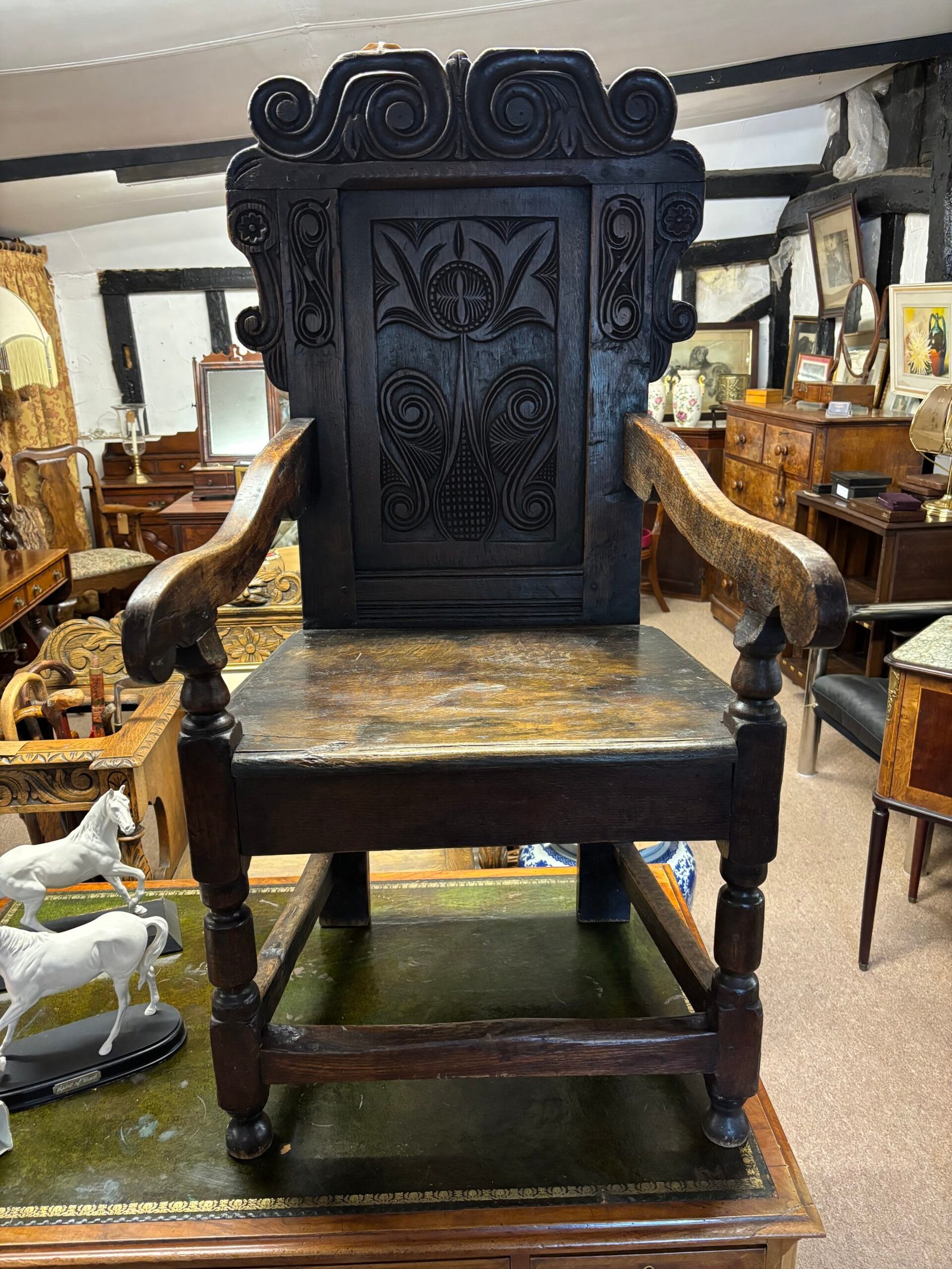
Early English Furniture from the 16th and 17th Centuries •
16th Century English Furniture (Tudor Period):
- Characterised by heavy, sturdy construction using oak.
- Designs were ornate and geometric, with intricate carvings, strapwork, and mouldings.
- Popular pieces included coffers (large chests), trestle tables, and turned chair legs**.**
- Decoration often featured heraldic motifs, linenfold panels, and gothic arches.
- Furniture was functional but also symbolised status.
17th Century English Furniture (Jacobean and Restoration Periods):
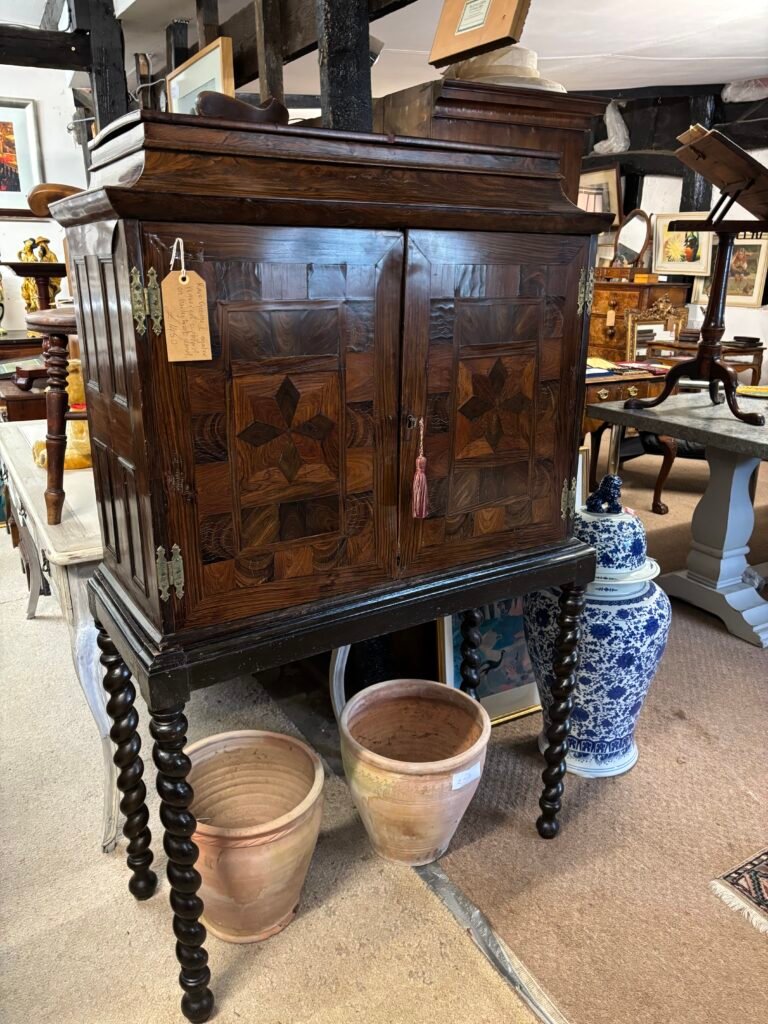
- The early 17th century (Jacobean style) maintained heavy oak construction but incorporated more elaborate carving, including scrollwork, strapwork, and floral motifs.
- Introduction of joined and veneered furniture with more refined shapes.
- After the Restoration (post-1660), furniture became lighter with the influence of continental European styles, especially Baroque.
- Use of walnut wood increased, and pieces featured curved legs (cabriole legs), inlays, and marquetry.
- Common furniture types: cabinet chairs, court cupboards, and gateleg tables.
- More comfort-orientated designs appeared with upholstered seats.
Summary:
- 16th-century furniture was characterised by its robust construction and use of heavy oak wood, often elaborately carved with intricate patterns and motifs. This style emphasised both structural solidity and the display of wealth and social status. Common features included:
- Massive, sturdy forms with strong, straight lines.
- Ornate carvings featuring geometric designs, floral motifs, and heraldic symbols.
- Use of dark stains or finishes to enhance the wood’s natural grain.
- Furniture pieces like chests, tables, and chairs were both functional and symbolic of prestige.
- Often included turning and panelling techniques that added depth and texture.
- This furniture reflected the Renaissance influence, combining practicality with artistic expression to assert the owner’s power and taste.
- 17th-century furniture evolved towards more decorative, refined forms with influences from Europe, lighter woods like walnut, and increased use of veneers and upholstery. The furniture of the 17th century was characterised by increased decoration, intricate carvings, and refined craftsmanship, reflecting the artistic and cultural influences of the period. It often featured elaborate details, luxurious materials, and styles that highlighted elegance and sophistication.
You make a great point! Combining old and new furniture can create a unique and harmonious look, especially when the pieces complement the style and character of your property. It’s all about balance and choosing items that enhance the space without overwhelming it. Mixing periods thoughtfully can add charm and personality to any room.
Please login to post a comment.
Bid with confidence on verified antiques through our secure online auction platform.
Useful Links
Quick Search
